Wall Surfaces Ready for Finishing
Drywall Repair in Waukesha for holes, cracks, water damage, and remodeling-related wall restoration
Drywall failures show up as visible holes from removed fixtures, cracks along seams where settling has stressed joints, and water stains where leaks have saturated paper facing and compromised structural integrity. Precision MGMT & Repairs handles drywall repair across residential homes and rental properties in Waukesha, addressing both small patch jobs and larger wall restoration projects. The service produces smooth, paint-ready surfaces that blend with surrounding walls, whether repairs involve tenant damage corrections, renovation-related drywall work, or maintenance fixes for aging interior surfaces.
Drywall repair begins with evaluating the extent of damage to determine whether patching existing material is sufficient or whether sections require full replacement due to water damage, extensive cracking, or structural concerns behind the wall surface. Small holes are filled with joint compound applied in layers, while larger openings require cutting back to nearby studs, installing new drywall pieces, taping seams, and building up compound coats to match the surrounding wall texture. Water-damaged drywall must be removed entirely because saturated paper facing loses adhesion and creates conditions for mold growth even after the surface dries.
Request a drywall inspection to assess wall damage and determine the repair approach needed before painting or finishing work begins.
What Changes After Wall Restoration
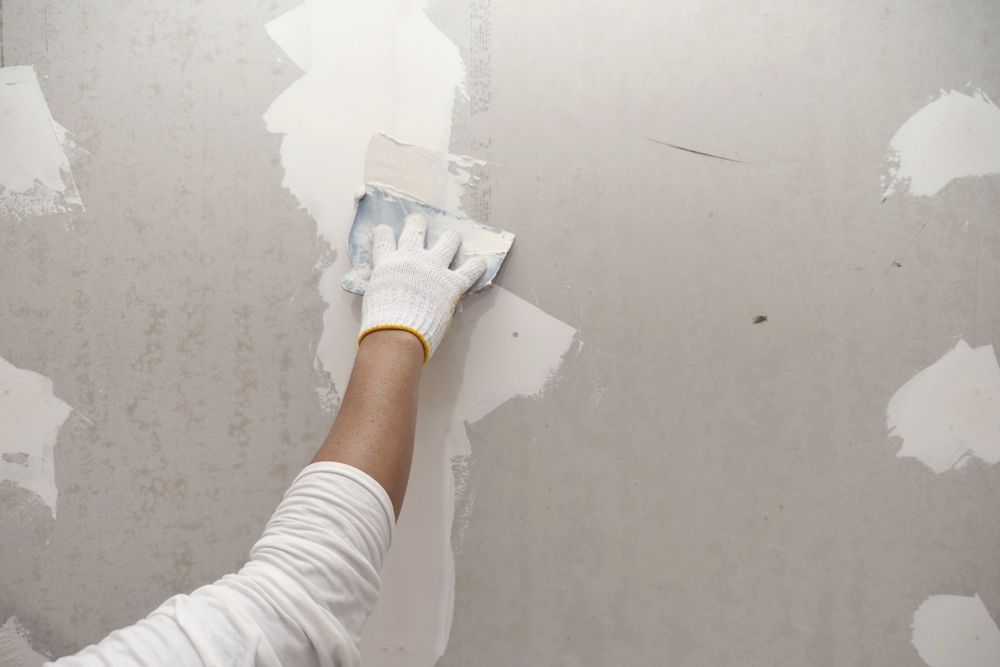
Proper drywall repair involves applying joint compound in thin, even layers rather than attempting to fill deep holes in a single application, which causes cracking as the material dries and shrinks. Each compound layer must dry completely before sanding and applying the next coat, with final sanding creating a smooth transition between the repair and existing wall surface. Texture matching requires replicating the pattern used on surrounding walls, whether that involves spray-applied orange peel, hand-troweled knockdown, or smooth finishes common in newer construction and recently renovated spaces.
After repairs are completed, walls show no visible patching marks under normal room lighting, surfaces accept paint evenly without the repaired areas appearing as darker or shinier spots, and texture patterns blend consistently across the entire wall. Professional drywall repair prevents further deterioration by sealing openings where moisture or air infiltration could enter wall cavities, and it restores the structural function of interior walls that provide lateral bracing for framing even though most property owners think of drywall solely as a cosmetic surface.
Drywall work connected to remodeling projects often involves cutting access openings for new electrical or plumbing installations, removing sections where layout changes require relocating walls, and patching areas where old fixtures have been removed. Repairs on rental properties typically address damage from tenant-installed shelving, holes from furniture impacts, and surface imperfections that accumulate across multiple occupancy cycles.
What Property Owners Usually Ask
Drywall repair questions often focus on whether damage can be patched or requires replacement, how repairs will look after painting, and what preparation is needed before work begins.
What size holes require drywall replacement rather than simple patching?
Openings larger than about six inches across typically need backing support and new drywall pieces rather than compound alone, because unsupported compound cracks under minor wall flex or impact even after it hardens completely.
How many joint compound coats are needed for smooth wall repairs?
Most repairs require at least three coats—an initial fill layer, a second coat to build surface level, and a final skim coat to refine smoothness—with sanding between each application to remove ridges and tool marks.
When does water-damaged drywall need full replacement versus drying and repair?
Any drywall where water has saturated the paper facing or caused visible sagging requires replacement, because the paper delamination compromises structural integrity and creates conditions where mold can develop behind the surface even after visible drying occurs.
Why do drywall cracks sometimes reappear after repairs in Waukesha homes?
Foundation settling, seasonal humidity changes that cause wood framing movement, and inadequate joint reinforcement during initial installation all stress drywall seams enough to crack repair compound if the underlying movement isn't addressed or if repairs don't include mesh tape for reinforcement.
What preparation helps drywall repairs proceed efficiently?
Clear furniture and wall decorations from the repair area, protect flooring with drop cloths since sanding generates fine dust that spreads throughout rooms, and identify whether walls will be repainted fully or only in patched areas so texture matching can be planned accordingly.
Precision MGMT & Repairs provides drywall repair support for property owners managing both routine maintenance corrections and renovation-related wall restoration. Arrange an evaluation to review wall condition and discuss repair options specific to your property needs.